How to Teach Major Scales to Middle School Band (Without Scale Sheets)
Teach the major scale pattern instead of a fingering list, with Three Minute Theory lessons on steps, half steps, solfege, and key signatures, plus Pitchy Bird and quick checks.
Hand a middle school band a scale sheet, and most students will memorize the fingerings in order. That works until you ask for a scale that is not on the sheet, or a scale that starts on a different note. Then the band is back to guessing, because nobody learned how a major scale is built.
If you are working out how to teach scales to a middle school band, teach the pattern first. Every major scale uses the same pattern of whole steps and half steps. Once students can hear it, name it with solfege, and read it from a key signature, they can figure out a new scale on their own. This plan covers that sequence in short warm-up pieces, using real Three Minute Theory lessons, games, and checks.
Why Scale Sheets Fall Short
Scale sheets are not useless. They are a fine way to practice a scale students already understand. The problem is using them to teach the scale in the first place.
- Students memorize a fingering list, not a pattern. They can play concert B-flat, but cannot explain why the fourth note is E-flat.
- The key signature gets skipped. Every accidental is printed on the sheet, so students never need to read the key.
- Each scale is a new memory task. Without the pattern, concert A-flat feels as hard as the first scale they ever learned.
Step 1: Hear Steps Before You Name Them
A scale is a set of steps. Before you talk about whole steps and half steps, make sure students can hear and see the difference between a step and a jump.
Three Minute Theory Chapter 32, Steps vs. Jumps, uses a familiar melody to show notes that move by step. Play it after long tones, then have students find three steps in the first line of their concert piece.
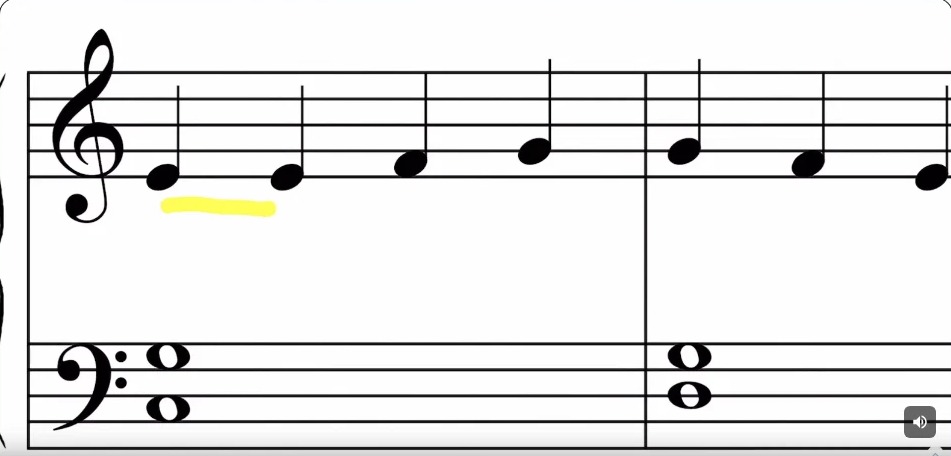
From Chapter 32, Steps vs. Jumps. After the example, have students trace a stepwise passage in their own part with a finger before they play it.
Then play two notes on your instrument and have students show a flat hand for a step or two fingers for a jump. Ten seconds, three pairs, and the ear is ready for the next step.
Step 2: Teach the Pattern, Whole Whole Half Whole Whole Whole Half
Chapter 10, Whole Steps vs. 1/2 Steps, teaches the idea at the center of every major scale. A half step is the closest distance between two notes. A whole step is two half steps. The lesson writes the pattern under a C major scale, with the two half steps circled.
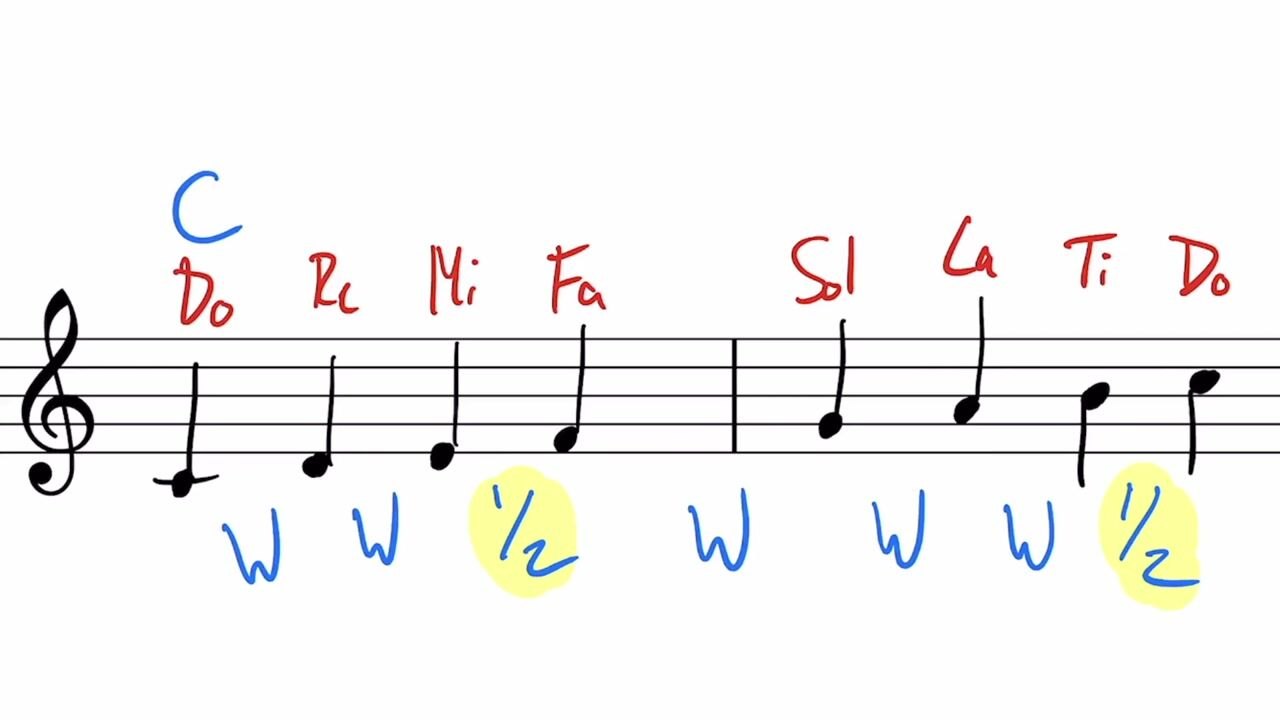
From Chapter 10, Whole Steps vs. 1/2 Steps. Point to the circled half steps, then ask, "Which two solfege pairs are always half steps?" The answer is Mi to Fa and Ti to Do.
The same lesson shows the pattern on a keyboard. Between Mi and Fa there is no black key, so the step is a half step.
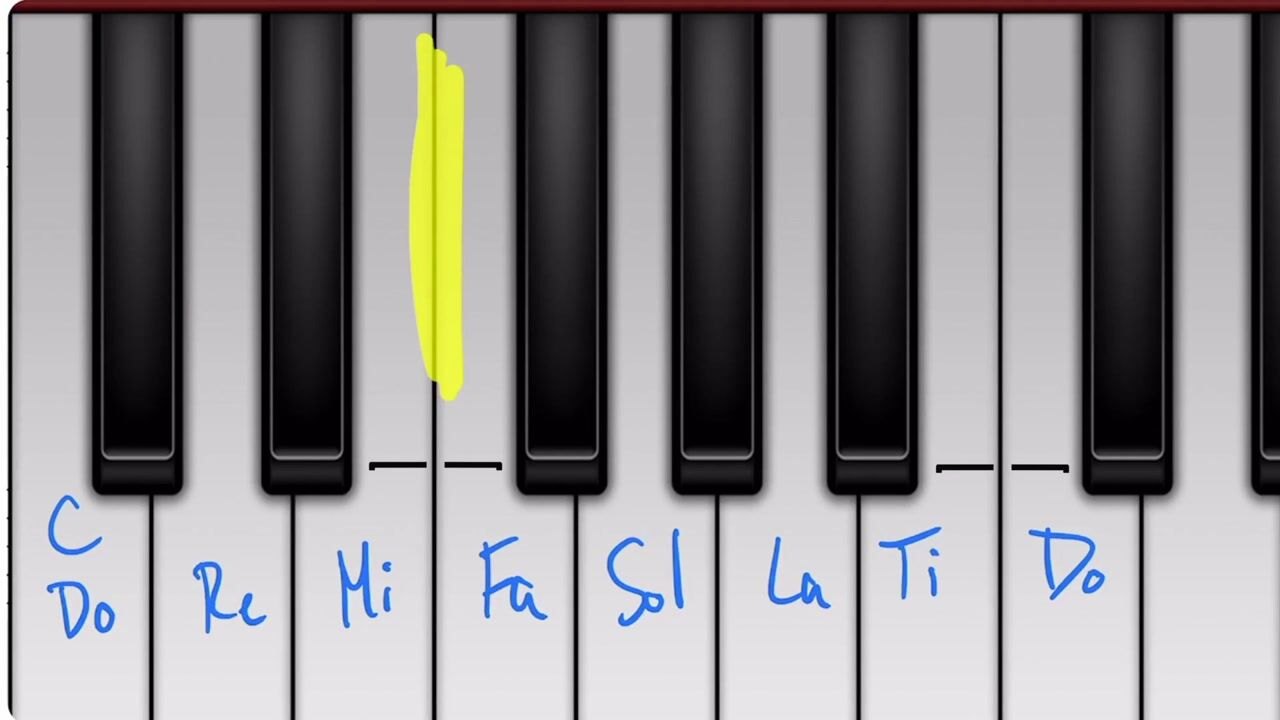
From Chapter 10. The highlighted half step between Mi and Fa is the moment the pattern clicks for many students. If you have a keyboard in the band room, show it live, too.
Now connect it to the band. Play the concert scale you are working on. Then ask each section to find the two half steps in their own written scale. Clarinets and flutes will find them on different letter names, but they will always land on Mi to Fa and Ti to Do.
Step 3: Give Every Scale Note a Solfege Name
Letter names change from key to key. Solfege does not. That is why solfege helps band students, even if you never ask them to sing.
Chapter 7, Solfege Syllables and Intro to Key Signatures, shows how any key can have its own Do. In this frame from the lesson, the key is E major, so E is Do, and the scale starts Do, Re, Mi, Fa.
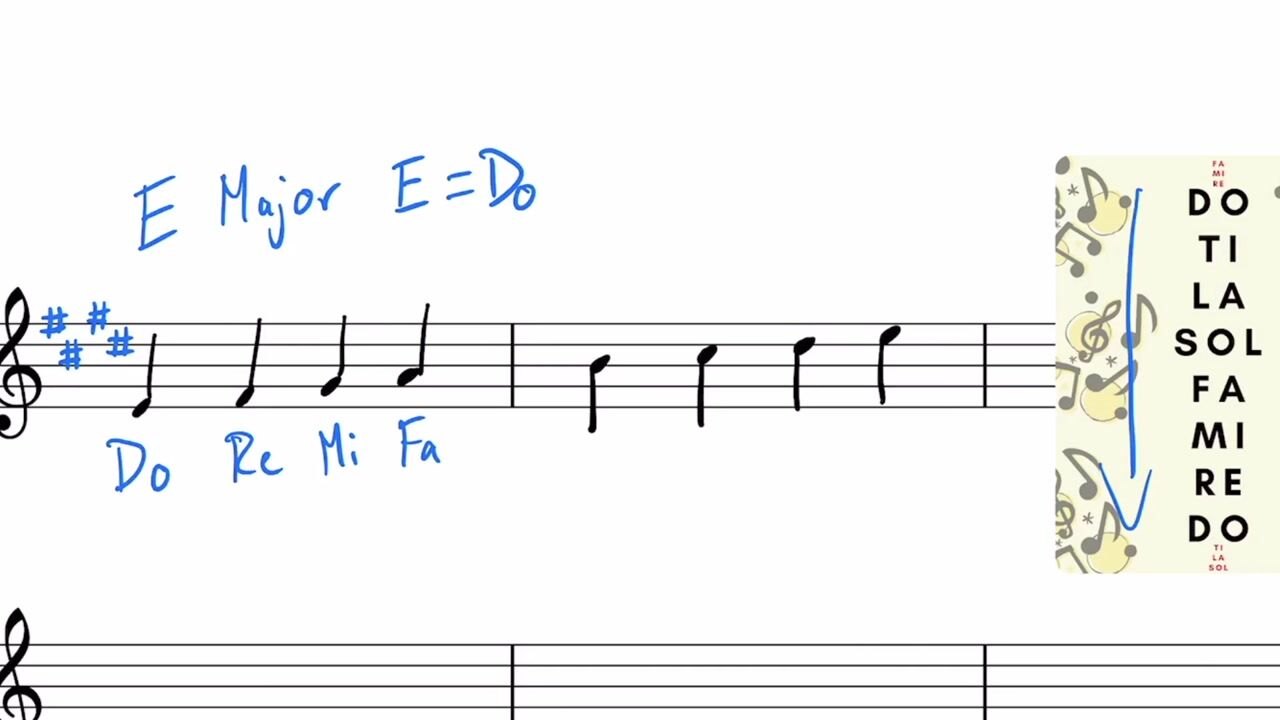
From Chapter 7. E major has four sharps, and E becomes Do. Ask students to name the solfege of the first three notes in their concert piece before they play it.
Once students think in solfege, every major scale has the same shape. Do to Re is a whole step, Mi to Fa is a half step, and Ti pulls up to Do. Have the band sing the scale on solfege once, then play it. Singing it once makes the half steps easier to hear when they play.
Step 4: Let the Key Signature Build the Scale
This is where scale sheets drop out. The key signature already tells students which notes to change. Teach them to read it.
Chapter 6 covers accidentals: sharps, flats, and naturals. Chapter 8, Identifying Key Signatures (Rules for Finding Do), gives students two rules. In a sharp key, the last sharp is Ti, and Do is a half step up. In a flat key, the last flat is Fa, and the second-to-last flat is Do.
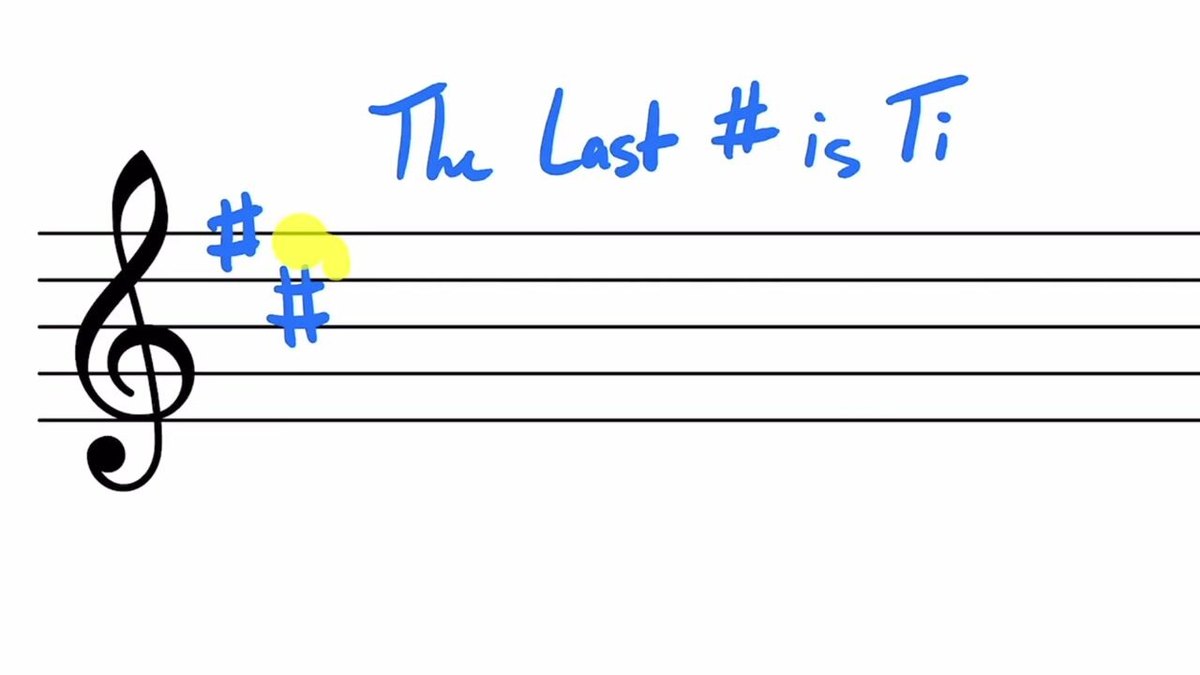
From the Chapter 8 lesson. The last sharp is Ti. Ask, "If Ti is C-sharp, where is Do?" Then play the D major scale from the key signature, not from a sheet.
Now students can build a scale from any key signature. Find Do, play up to the next Do, and use every sharp or flat in the key. For a full warm-up routine on reading keys, including concert pitch vs. written keys for transposing instruments, see our post on how to teach key signatures to band.
Practice the rules with TMT Trivia on Chapter 8. The key signature appears on a staff, which is exactly what students see on their part.
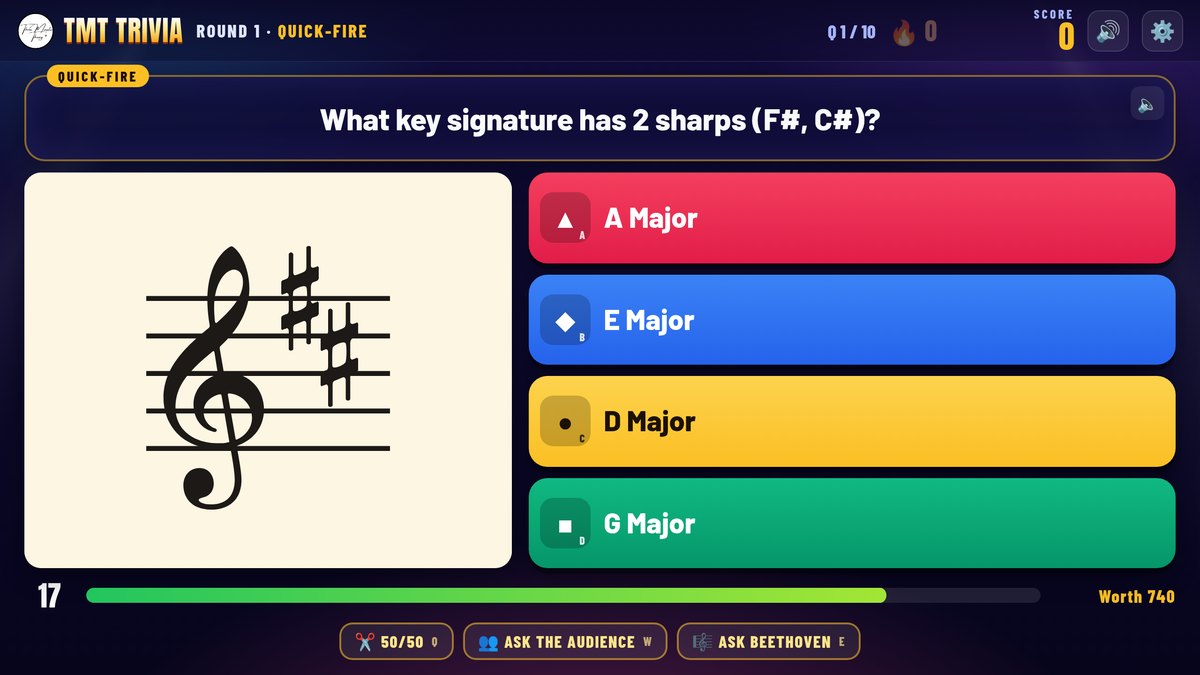
TMT Trivia on Chapter 8. After the class names D major, have the band play the D major scale before the next question.
Step 5: Put Do in Their Ears With Pitchy Bird
Naming a scale and hearing it are different skills. Pitchy Bird is a pitch-matching game in the Music Tools on the teacher dashboard. A student sings or plays into the microphone, and the bird flies in the lane that matches the pitch.
You can set it to any of the 12 major keys and choose the instrument, from flute and clarinet to trumpet, trombone, and tuba. In Lanes view, the lanes run from low Do to high Do, so the scale becomes eight lanes students can see.
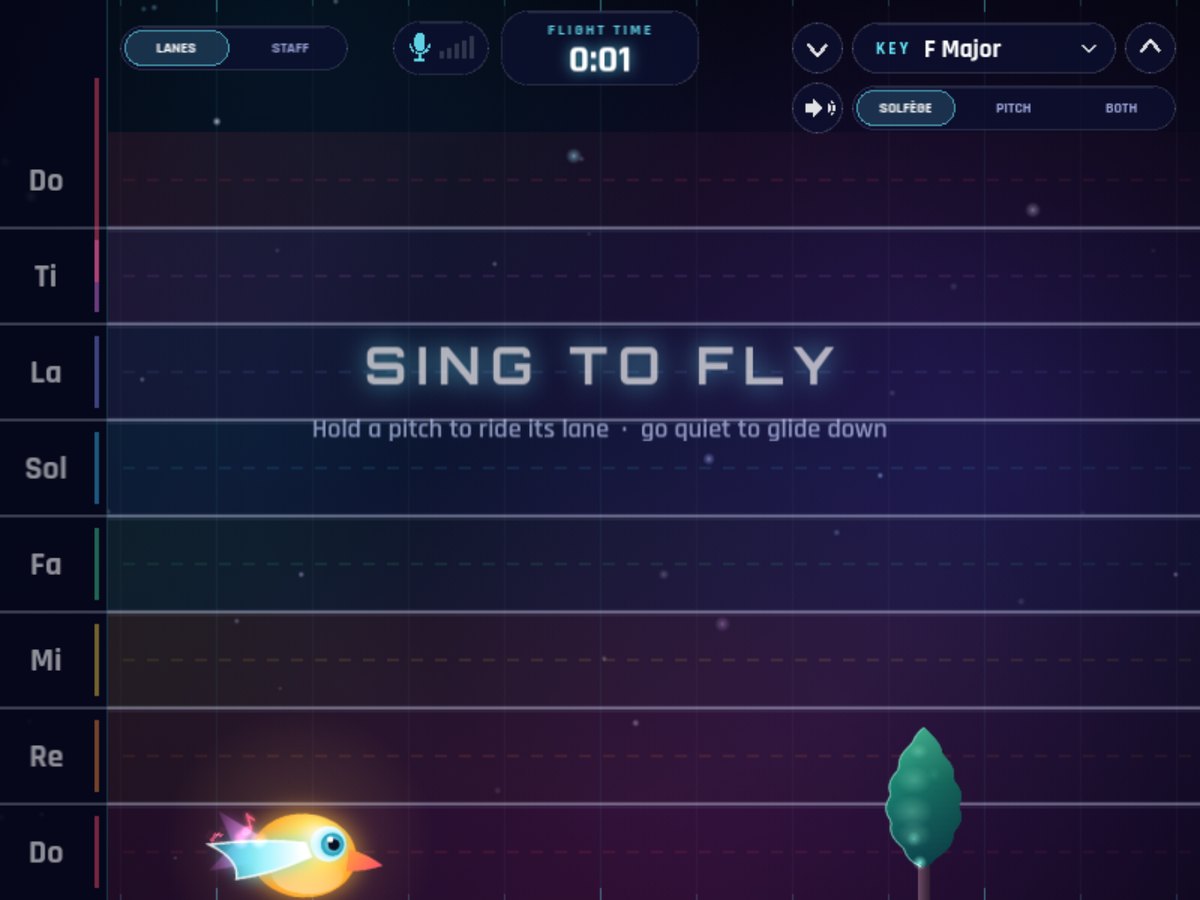
Pitchy Bird in Lanes view, in F major. Have one volunteer fly up the scale from Do to Do while the band listens for the half steps at Mi to Fa and Ti to Do.
Staff view shows the key signature on a staff in the clef for the instrument you pick. That ties the sound of the scale back to the key signature on the page.
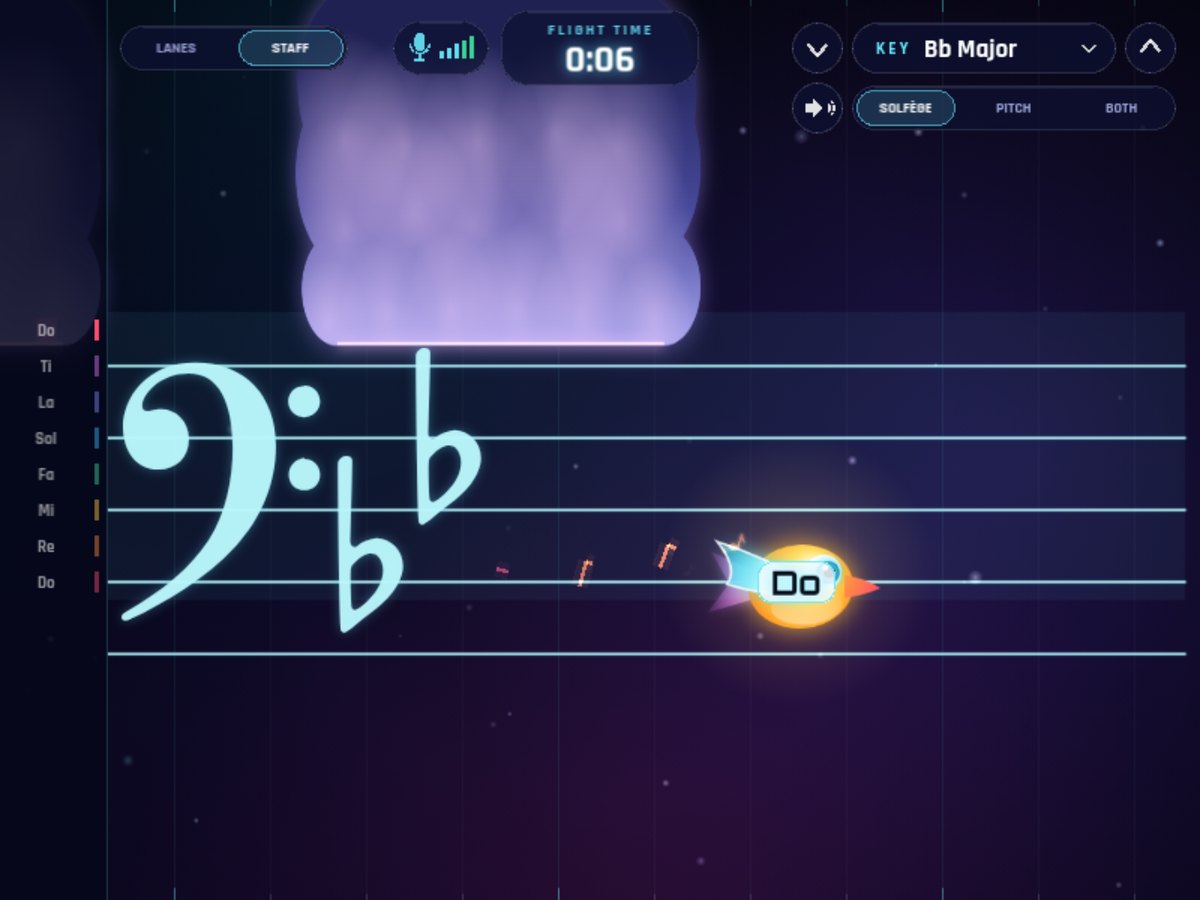
Pitchy Bird in Staff view, set to B-flat major with a bass clef instrument. Use it with low brass, then have the whole band play the concert B-flat scale.
A Two-Week Scale Routine Without a Scale Sheet
Each day takes about three minutes after long tones. Then go straight into the concert scale.
- Day 1: Chapter 32 lesson on steps vs. jumps. Play three step-or-jump pairs.
- Day 2: Chapter 10 lesson. Write W W H W W W H on the board and play the concert scale slowly.
- Day 3: Each section finds the two half steps in their written scale.
- Day 4: Chapter 7 lesson. Sing the scale on solfege once, then play it.
- Day 5: Quick check with a game or Live Review on Chapter 10.
- Day 6: Chapter 8 lesson. Find Do from the key signature of your concert piece.
- Day 7: Build a new concert scale from its key signature, with no sheet.
- Day 8: Pitchy Bird in that key. One volunteer flies the scale, then the band plays it.
- Day 9: TMT Trivia on Chapter 8, playing each scale that comes up.
- Day 10: Check with an assigned game or the chapter assessment.
Check It Without Losing Rehearsal
For a homework review, assign TMT Basketball on Chapter 8. Students score from the floor spot with the right answer to move on to the next question. You can mix up to three chapters in one game, so Chapters 7, 8, and 10 can be one review.
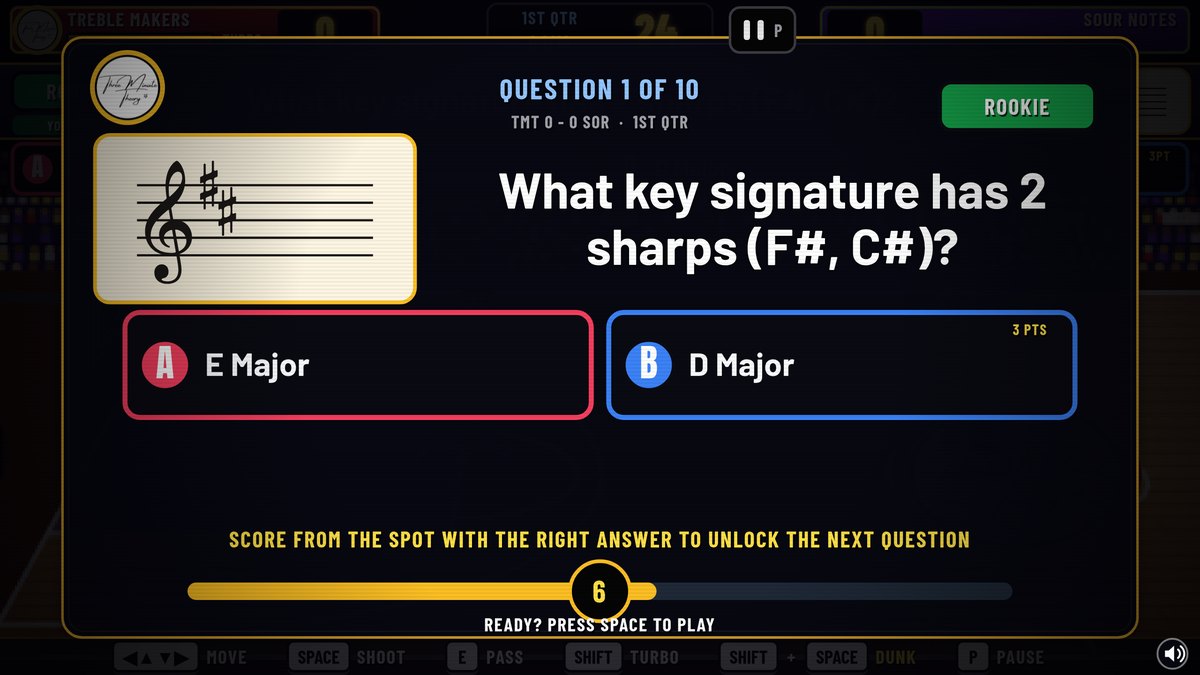
TMT Basketball playing Chapter 8. Assign it the night after you teach the rules, with Chapter 10 mixed in.
For a whole-band check, use Live Review on Chapter 8 or Chapter 10. The lesson plays on the room screen, and student phones become answer pads. You pick 3 to 10 questions and can save the scores to the gradebook.
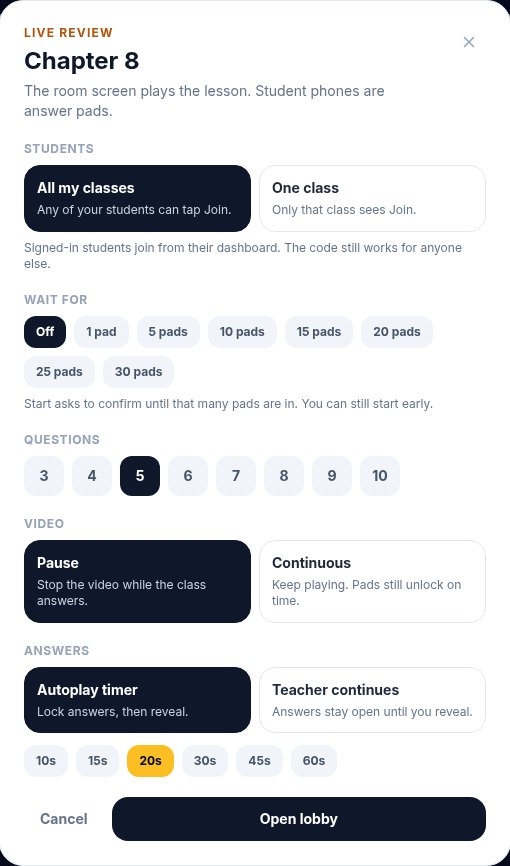
The Live Review setup for Chapter 8. For a scale check, choose 5 questions and Pause, then play the scale from the last key signature that came up.
For a written check, the Assessments page has 10 questions for each chapter in Volume 1. Select Chapters 6, 7, 8, and 10 to project or assign one scale and key signature quiz.
Mistakes I See Most (and Quick Fixes)
- Playing the right letters with the wrong accidental. Fix: before the scale, name every sharp or flat in the key signature out loud.
- Missing the half steps. Fix: have students say "half" every time they reach Mi to Fa or Ti to Do on the first run.
- Memorizing one octave only. Fix: once the first octave is solid, play the scale up an octave or down from Do to Sol below.
- Treating each scale as new. Fix: ask, "Where is Do? Where are the half steps?" for every new key.
Frequently Asked Questions
What order should I teach major scales to middle school band?
Start with the concert scales in your current music, since students will use them right away. Many middle school bands begin with concert B-flat, E-flat, and F. Then add keys as your repertoire calls for them.
Do band students need to memorize scale sheets?
They can practice from them, but they should not learn scales only from a sheet. Teach the whole and half step pattern and the key signature rules first, so students can build any major scale on their own.
What is the whole and half step pattern of a major scale?
Whole, whole, half, whole, whole, whole, half. In solfege, the half steps fall between Mi and Fa, and between Ti and Do.
Should band students use solfege?
Yes, at least for scale work. Solfege names stay the same in every key, so the pattern of the scale stays the same, too. Students do not need to sing well to use it.
Start Tomorrow
Pick the concert scale in your next piece. Before you play it, ask your band to find the two half steps in their own written scale. That one minute is the start of a scale habit that does not need a sheet.
To see how scale work fits the rest of the band sequence, read music theory lessons for band. If students still need help reading the staff, start with how to teach note reading in middle school band.
If you want these lessons and games ready to go, see Three Minute Theory for band directors, or try Three Minute Theory free for 7 days at ThreeMinuteTheory.com. When your band is ready to sight-read in those keys, our sister app SightReadQuest offers daily sight-reading practice students can sing or play into a mic.